Feeds:
Posts
Comments

Yak and other dung

October 14, 2008, Namche Bazar

namche bazar monistaryNamche Bazar Monastery

After some looking I found the Sherpa museum. It was locked, but a care taker let me in and I wondered alone amongst the tools and belongings of the people who truly have a mastery of these mountains. Nothing was behind Plexiglas, and there were no alarms; simply a “request to respect” our small collection.  After walking around, I was offered the opportunity to see a slide show about the area that had been prepared  by a local hotel owner and photographer.  It was a very low tech power point but I enjoyed sitting in the musty room (which was also storing Yak dung) while the ancient PC labored to load each photo. Given my interest, I was then given a private tour of the Everest room that included a great newspaper collection (under Plexiglas this time) documenting the climbing history of the worlds tallest mountain.  They were all here: Tenzing Sherpa, Sir Ed, Jim Whitaker, Rob Hall…all the great climbers and their greater Sherpa support teams. One memorable quote from the great Kiwi caught my eye from 1953:  “We knocked the bastard off”.  I may use that line on Island Peak.  HUBRIS dummy…never forget hubris.

yak drying wallYak and other dung drying

After awakening to the Tibetan horns of the monastery, I went for a walk and saw what I had previously been described at the museum.  Away from the tourist routes I saw two men mixing human waste with Yak, Yakow and likely other dung.  They were forming the mixture into large pancake sized disk.  After the disk are dried, according to my understanding, the cakes are burned for heating and cooking fuel and the “ash” is used as a fertilizer in the high altitude gardens which support mostly potatoes and HUGE cabbage I see growing around town.

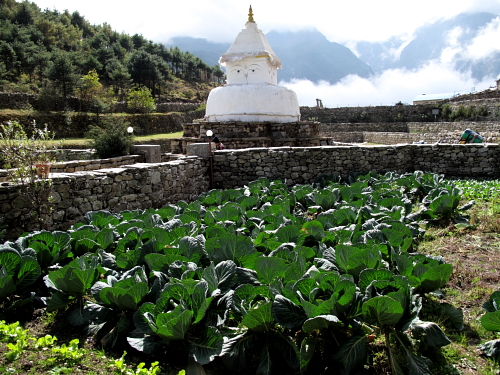
cabage

Big dung cabbage with help from Stupa

The morning air was also filled with juniper smoke as small dried branches are traditionally burned to make the “Gods happy”.   This smoke smells really good as it wafts up in small clouds from mini shrines at nearly every home, lodge, and shop.
October 13, 2009 Phakding – Namche Bazar

“Look asshole, just because people are poor and it may appear they don’t care, you don’t pee on the wall of someone’s home. You also don’t snap your fingers at the people who are trying, with limited resources, to meet your wimpy (myself included) needs”.  The bad behavior is isolated and most people are fantastic but occasionally a few have tempted my walking stick to end up against their arrogant colonial heads.  We often hear about the justly named ugly American traveler, and I certainly witnessed this previously in Paris, and to a lesser extent New Zealand, but the American crowd here are mostly the outdoor type and they are representing the stars and stripes rather well.  In fact, my friend Martin who is Polish but lives in Sweden said: “Not to be rude and please take no offense, but if the Americans here in Nepal, yourself included I would add, would show up more often abroad and in the media, you guys would have a much better world reputation”. The big groups seems to cause the most consternation and I guess some is understandable. They paid a lot of money for this trip (about double what I paid by booking local), they have unrealistic high expectations (the operators have some responsibility – as they over promise and under deliver), and large group dynamics create a feeding frenzy of “Us first, us first, we are German after all”. The best “You have got to be flipping kidding me story” was the French guy I witnessed who wanted to buy bottled water.  Now bottled water is carried up these mountains by man and/or beast and it is dusty out here.  So while the proprietor hands this snob. bottle after bottle of water (after wiping each top as is customary) he continues to reject them for being “dirty”.  After 12-15 bottles, the owner sends her son to another tea house and he brings back more bottles of water; again “disgusting – dirty”. Finally, she starts speaking in Nepalese and the boy disappears; I see him outside polishing the plastic water bottles out of sight of the French guy.  When presented with the sparkling plastic bottle this pin-head Parisian says: “finally, clean water”;  he then wants to negotiate the price. My hiking pole almost went through his spleen with a “No, you eat cake” comment from Versailles.
jax with load

Yakow

We followed many Yakow trains out of Lukla and up to Namche Bazar.  These sturdy beast are a cross between a Yak and a cow and are used at lower elevations.  Yaks, apparently do not feel good below 3000m and actually start loosing their hair if they get to much oxygen. Yakows on the other hand like thick air and work hard; they are no match for the size and strength of the big male Yaks up high however. Now at home, I give things weighing about a ton with attached horns a wide berth, and this has, to the annoyance of locals, been my practice here.  When I see these buffalo looking things coming, I get the hell out of their way while little school kids walk right by them and slap-em, silly if they get out of line.

We stay at a lovely tea house for a day of acclimation in Namche Bazar where I enjoy talking to the owner about his holiness the Dali Lama.  She has several photos of her family with the exiled leader of Tibet and her husband has traveled with the great monk to the United States and I believe elsewhere. I visit the local monastery and witness the local monks continually chanting their mantras in order to bring focus and quiet to their minds.

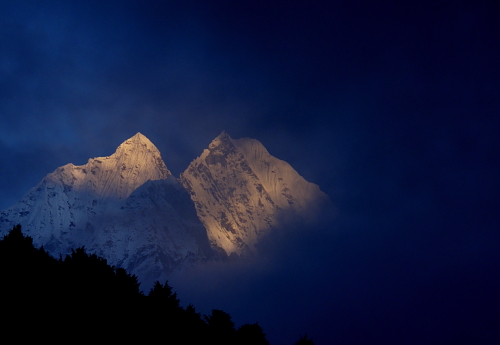
mt above namcheMt. above Namche Bazar

I got off to a good start with this tea house owner when I requested a shower. She gave me the keys and I went into the small closet that was the shower room.  On the wall was a propane instant hot water heater.  I got naked, turned on the water, and waited for the heat.  Instead, I found myself bathing in the fumes of highly explosive gas.  I turned off the water, threw on my skivvies and got the hell out of there.  I call for help and this traditionally dressed Tibetan women with a huge smile shows up and turns the water back on and laughs hysterically when the not so small explosion ultimate happens as the unit lights. “Happens every time, you pay me extra, I pay to have fixed”. She then looks at me standing in my briefs and starts laughing uncontrollably while shaking her head. About an hour later a British fellow runs up the stairs half naked complaining of a “gas” smell in the shower and a possibility of “real danger”.  The Tibetan women looks at me and I say to this poor chap: “Happens all the time, you pay her extra and she will have fixed, otherwise just wait for the explosion”.

jax hanging

Yakows hanging out

I was very happy,  to the point of smugness, with my performance on the way to Namche; I beat the porter with the plywood to the top of the hill! I was carrying Angin’s small day pack while he carried my full pack. The plywood guy was hauling 4 full sheets of our U.S equivalent (4X8X¾) laminated wood. To be clear, I can not carry one of these sheets from the rack at Home Depot to my truck in the parking lot.  This guy walked, bent over to nearly 70 degrees, with this wood on his nearly flat back.  He was wearing flip flops, had to cross several narrow suspension bridges, and walk up a trail that was effectively a boulder strewn staircase.  It took me about 5 hours, but I beat him by over 20 meters: Go America! Later in the week I would see another porter carrying 7 (4X4X7is) post in the same manor; he would beat me easily and walked out of sight within an hour.

Below the tea house two men are making the foundation material for structures I will see throughout this region.  The are making blocks out of solid granite that they have exposed beneath the earths surface. One man swings a huge sledge hammer while the other holds a short handled tool that has a spike on the end of it. After several blow, the a small hole begins to appear and water is added to the hole as a lubricant. Ultimately a big piece of granite is broke free and the men turn their attention to the more careful work of forming very uniform rectangular blocks. They utilize the natural crack lines in the rock and during my two day stay they hand chisel about 12 blocks.  When I returned 10 plus days later, the underlying granite had been completely transformed into a stack of nearly a hundred perfect blocks.

making boards
Making boards
Beyond building blocks, timbers are hand made throughout Nepal also.  A tree is felled and a platform structure is built out over a ledge.  This allows for one person to stand about 4 feet above his partner sawyer. A long saw is drawn up with a “touch down” motion from the upper person and drawn down with the opposite motion from the person below.  In doing this the four bark sides are carefully sawn away leaving a square timber.  I watched several men perform this task and it looks to take about a half a day to make one 4x4x8 post.  If you need a 2×4, well that naturally takes one more long and careful cut.

October 12, 2009: KTM – Luklaa- Phadkimg 2610

The international terminal in KTM is a model of absolute sanity and efficiency compared to the domestic terminal. There are about 600 people in the terminal with a even mixture of westerners and locals.  We have had our bags on and OFF, the scales 4 times in the last two hours and each time someone touches my bag they ask for a tip; I just told Angin that no one else is allowed to touch my bag because if they do I will not have any tip money left for him; he is now protecting his tip like a lion protecting her cubs.  My flight is actually not listed on the intermittently working flight status board, and another couple I talked to who are scheduled for the same time and the same airlines, left on a shuttle bus to the tarmac 10 minutes ago; oh wait, they are back.   We are now on another shuttle bus together; oh wait, I am now being ushered off this bus to the great laughter of everyone. Is that our plane?  “No”.  That was simply a plane that you were supposed to get out of your latest bus and look out…back on the bus. Another plane and it is ours; I would sure feel better if they kept that grounding cord attached while they fueled this relic up.
pil.ot
Is that a car GPS?

The signed said “We guarantee all seats to be window seats”.  That is a rare promise that will actually be kept in Nepal.  The plane holds 14 people – 7 on each side. My window has a big crack in it that looks to be repaired with Shoe-go.  One thing for sure, they do not need to remind everyone to fasten their seat belts as we are all ratcheting ourselves in tight.  What is this?  Cotton for your ears and a piece of hard candy; how nice- welcome to first class.  Engine one fires and the propeller whirls to life.  Number two – cough, wheeze, belch of black smoke – but she fires; no worries, I know this bird can fly on one engine.  Is that a automobile GPS on the dash?  Is the co-pilot really tapping the instruments to get the needle to move?  The pilot turns towards us, gives a half salute, revs the two big jets, releases the break and we barrel down the runway….we are in the air.

out the wing
One engine is all we need

We are very late (1400 hours) in the day to be flying into Lukla – where  last year a similar plane hit the nose of the runway due to limited visibility killing all passengers on board. I can see that we are fully equipped with instruments and they seem to be working, but I also notice that we are flying a cloud avoidance route. As we approach the typical starting point for Mt. Everest,  I immediately see why – we are flying in between two mountains; one on each side. And “shit” that is a mountain in front of us. WOW, we just landed on a very short  runway that extends to the edge of the bench before falling into the abyss. What? The runway actually runs uphill at about a 6% grade. One thing for sure, if you take off from here and do not have enough air speed you will either drop to the earth or hopefully glide into a mountain.

lucka air

Upslope runway of Lukla
luckla sign
Welcome to Everest region

Hope this cough of mine gets better


Ok, a few more

Kathmandu, Nepal heading to Lukla in an hour

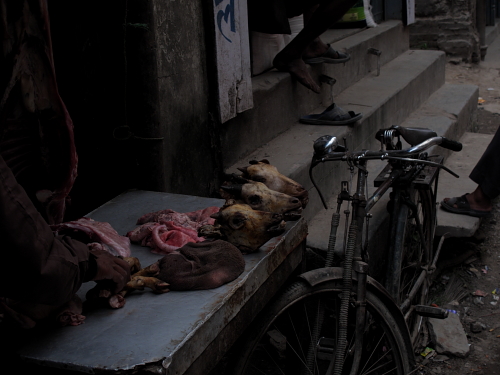
goats and bicycle

Goat parts and bicyle

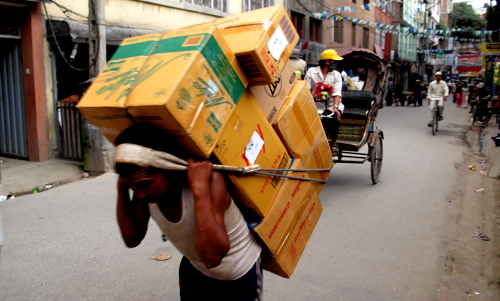
man box2

Most freight in Nepal is moved by human powere

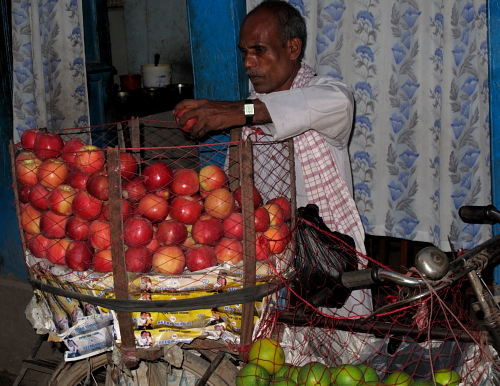
apple bike

Bicycles are not for recreation

Kathmandu, Nepal

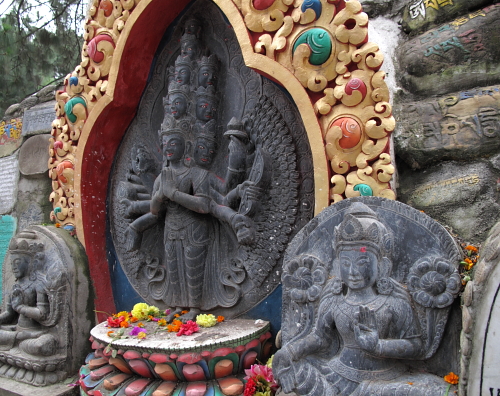
I am generally well, the power is on, the internet is working, and I had some time to post some photos.  Now if you have not figured this out yet, I post photos and write about stuff by request; thus since Shannon said she wanted more of Statues, Buddhas, Stupas, so she could paint or draw them I will kindly try and oblige. There is obviously no structure or method to my journal, so seriously if you are interested in something, have a question or want to see more of something…..just post a comment and I will do my best.  I can also send a high resolution full size jpeg to your individual email if requested.

gsnesh

Offering of rice and flowers to gods

dog

Da Dog

They say to be very careful of the dogs as they are vicious.  What?  the guards here at our hotel use me to catch our hotel dog each night as he likes me to rub his head.

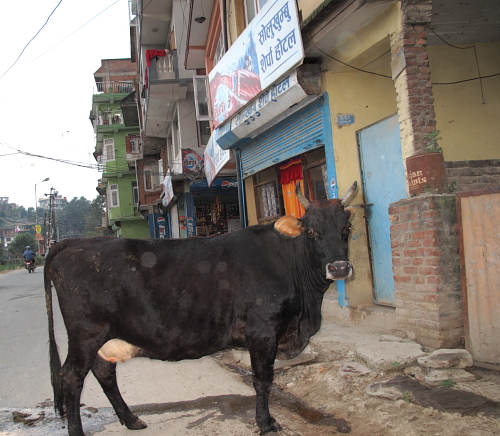
cow in ktm

They just kind of wonder the street eating garbage

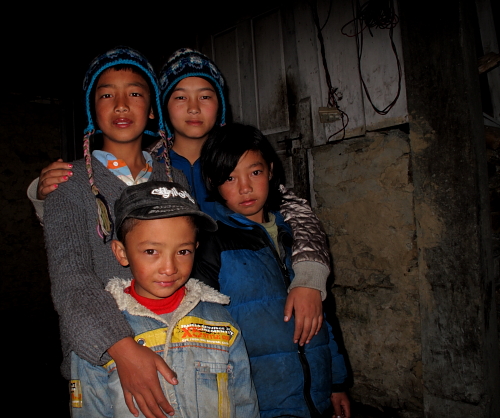
kids of lakes

Kids of Langtang region

more kids

So little and such big smiles

langtang hiker

Langtang

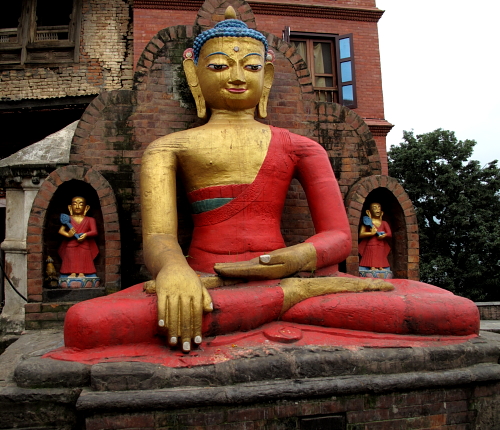
sitting buddha

Never tire of the Buddha, good thing…they are everywhere

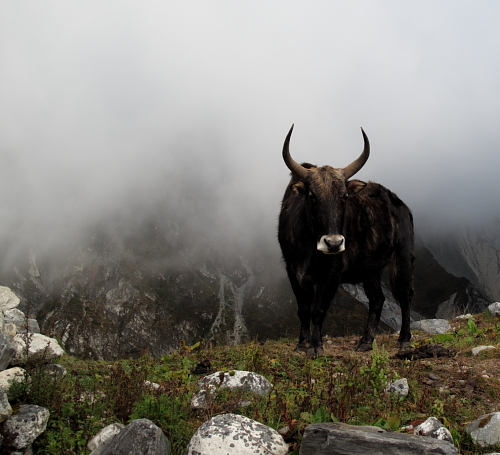
yak in mist

Yak or Nak in the mist


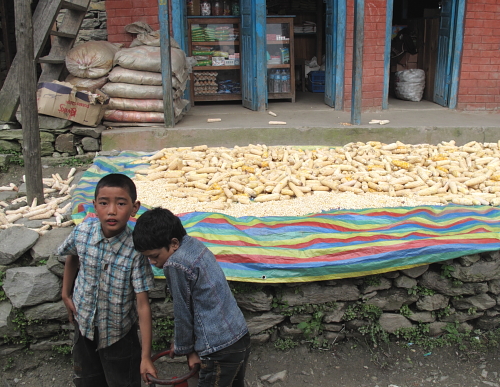
boys and corn


Corn dries all across Nepal this time of year

temple

Temple

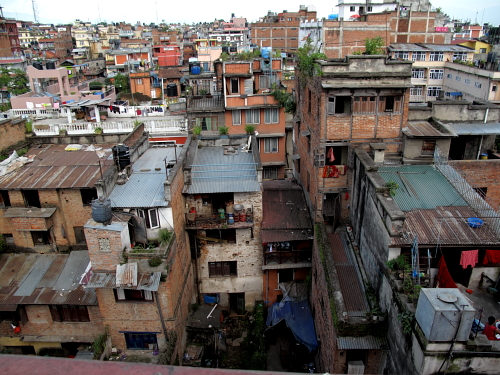
ktm

KTM


Kathmandu, Nepal

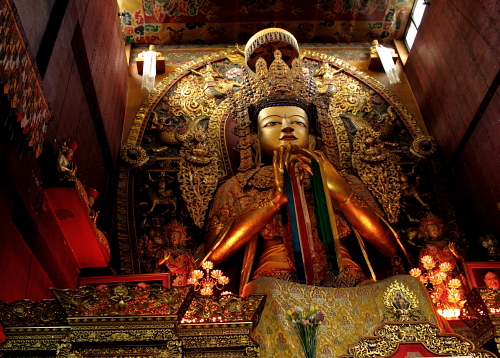
budha

Sitting Buddha, little Tibet

Ok, so maybe an expedition is a bit of an exaggeration, but I figure a porter and a climbing guide, along with boots, crampons, ropes, helmet, ice ace, and 20,000 ft….has to count for something. I leave in the morning and will be gone for nearly a month.  My new summit attempt day is October the 30th.  On Dad’s birthday, the 23rd of October, I should be on top of Kalipathar enjoying the reported best view of the Himalaya (happy early birthday Dad); I should be able to see California from the top and will be thinking of you.  My schedule is below and the locations can be found on any good map of the Everest regions if you are interested. Oh yea, “lodge” does not mean Timberline Lodge in the North Cascades; rather think of a shelter with a plywood bed complete with 4 inches of foam, a squat toilet down the hall, and some hot noodles to eat….all good.

Number one fact checker comes through again.  I reported that Cei had pulmonary edema but she actually had cerebral edema. the former being a lung problem while the later is the much more serious brain swelling problem attributed to lack of oxygen reaching he brain. Thank you John, appreciate the help as always.

My dear sister Sheri said: ” Next time you post translate the mountain heights into feet for me :)”.  I love you girl, but that is not going to happen. I am having to train myself in metric because when you say “feet” here people just role there eyes with that “catch a clue American” look.  Seriously, I have talked to people from no less than 20 countries and NO ONE uses feet and can not believe the idiocy of the U.S for keeping  a system that is archaic, difficult, inconsistent with the world’s scientific community, and directly responsible for conversion errors that have caused human life.  But then again the “American government is famous for their arrogance” is typically the conclusion we jointly come to; albeit with good humor.  I often respond with one of my favorite quotes that RT shared with me: “Yes, it is easy to be principled when you are insignificant” .  That pretty much drives a final nail and solidifies the arrogance argument completely. Wanting to help  my math challenged sibling however,  the math is: 1 M = 3.28 ft.  Or simply multiply the meters times 3.3 and you will be close enough for understanding purposes.

go-BIG 2009 Himalayan Expedition: Gokyo valley, Chola pass, Everest base camp, Imja  Tse summit

Day 01: (October 12, 2009)

Fly to Lukla early in the morning (2827 m. 45 minutes flight) and then trek to Phakding (2-3 hours walking). Over night at lodge.

Day 02:

PHAKDING – NAMCHE (3440 m 6-7 hours.). Over night at lodge.

Day 03:

Fully day acclimatization and explore to climbers museum, Sherpa culture museum and visit to monastery.

Day 04:

Trek to Khumjung (3850 m 3-4 hours)  Over night at lodge.

Day 05:

KHUMJUNG – DHOLE (6 hours 4130 m.). Over night at lodge

Day 06:

DHOLE – MACHHERMO (4 hours 4520 m). Over night at lodge

Day 07:

MAHHERMO – GOKYO (4 hours 4860 m) Over night at lodge.

Day 08:

Wake early morning, climb Gokyo peak (5480 m)  Over night at lodge

Day 09:

Early morning walk to Chola Pass (5430 m 8-9 hours) Over night at Dhongla (5060 mtrs) Over night at lodge.

Day 10:

Trek to Labuche (5 hours 4860 m) Over night at lodge.

Day 11:

Rest day at Labuche.

Day 12:

Early morning VISIT KALAPATHAR for best Himalaya view (4 hours 5545 m) back to Gorekshep. Over night at lodge.

Day 13:

Early morning visit Everest Base camp (5 hours 5340 mtrs.) trek back to  Labuche (5 hours 4830 m) Over night at lodge.

Day 14:

Trek to Dingboche. Over night at lodge.

Day 15:

Trek to CHHUKUNG (7-8 hours 4730 m). Over night at lodge

Day 16:

Rest day at Chhukung. You will be meeting your climbing guide and check all the equipment.

Day 17:

CHHUKUNG – ISLAND PEAK BASE CAMP (6-7 hours 5130 m). Over night at tent

Day 18:

ISLAND BASE CAMP TO HIGH CAMP (Imja Tse) (5-6 hours. 5820 m.). Over night at tent.

Day 19: (October 30. 2009)

HIGH CAMP SUMMIT PEAK  (Imja Tse) (6189 m.) back to Base camp/Chhukung Over night at lodge.

Day 20:

PHERICHE – THYANGBOCHE  (3868 m 5-6 hours.) Over night at lodge.

Day 21:

THYANGBOCHE – MONJO (7 hours.). Over night at lodge.

Day 22:

MONJO – LUKLA (7-8 hours). Over night at lodge.

Day 23:

LUKLA fly to KTM.  (35 minutes flight.). Transfer to selected hotel in Kathmandu. Over night stay.

Talk to you all in a month; know you are in my thoughts and my heart.

I have been hanging out at the International Guest House (recommended) in KTM for nearly a week. I developed a bit of a lingering cough in the mountains and it has been dancing into a respiratory infection ever since. Yesterday I went to the Travel Medical Clinic with my friends (who were there for a serious problem), and I got a chance to chat with a Scottish doctor for a minute.  He was very helpful, not overly concerned but also not wild about me going back to high altitude: “It will only get worse at altitude, and makes you much more vulnerable to problems – your oxygen uptake will be further limited”. He suggested a series of antibiotics as a bit of insurance against further development of an infection, and told me to monitor closely when back in the mountains.
My friends, David and Cei, from Australia needed to see the doctor again because Cei was still suffering from brain swelling (or being a “fat head” as her father said once he heard she was going to be ok). About a week ago, she had been at just over 4500m and had a sudden onset of Pulmonary Edema; a very dangerous and life threatening ailment resulting in massive swelling of the brain, followed by ruptured blood vesicles in the cranium….then you die.  This is caused when the brain is starved of oxygen (at 5000m there is only ~50% of the O2 available, and given that we loose ~2% of our V02 (max oxygen uptake0 each year as we age…these altitude can cause problems.  Anyway Cei is very fit, was well rested, well hydrated, and acclimated properly. She was even taking Diamox (high altitude drug that helps O2 absorption-somehow) and had been higher a few days prior. Regardless,  she suddenly gets a massive headache, starts to throw-up uncontrollably, and begins to loose consciousness; all within an hour.  Miraculously, an Italian doctor was staying in a local village and had a medical kit from a summit expedition.  Cei, was given a huge dosage of steroids to stop the swelling, they tried to get a helicopter in but the weather prevented it, so they literally stuffed her into a “porter basket”, and her climbing guide, after securing the basket around his forehead, ran down slope for 2 jarring hours to a location that the aircraft could reach and an altitude that she may survive at.  So yesterday, we went to the Dr. because she was still having great difficulty with her motor skills.  Fortunately, her clinical exam showed improvement and the doctor believed she was going to fully recover; but they are going to continue to monitor and do a MRI (they all ready did a CT) tomorrow if she is not better.  It is also possible the altitude caused a stroke, but the doctor does not think so, and like he said “even if it did, there is nothing we can do about that now – is there”.  Medicine is a bit more practical and direct here.  Update: David, Cei and I just had breakfast and she continues to improve; they are booking tickets to a beach in Thailand to recover, and are planning on coming back in the spring to “finish, unfinished business…attempt the +6000m Island Peak again”. Update two: fully recovered.
As for me, I going for it in a few days.  I plan to fly to Lukla on the 10th and start a 21 day mini expedition.  I plan to ascend up the Gokyo valley, climb Gokyo peak (5480m), cross Chola pass and rejoin the primary route to Mt. Everest.  From there I will ascend to Everest base camp and Kalaphathar (5545) and the infamous ice fields.  Then I plan to double back and take the side route up to Chhakung; hike to high camp on Imja Tse (5820m) and tent over, and finally at 0200 hours around the 26th or 27thattempt to summit Imja Tse (Island Peak, 6181M).  So around that time, look up because that is hopefully where I will be.
What month is it? The monsoons are supposed to be long gone, but Nepal and much of Asia is getting hammered with rain; mudslides and flooding are widespread and the paper reported a corresponding 34 dead in Nepal. In KTM it has been coming down hard for a few days now and I am glad I am not in the mountain this week.  My trip may be pushed out a bit farther as many flights to Lukla are being cancelled.  This is fine with me however, because over the years every time they try to “force” flights onto Lukla’s  difficult mountain airstrip – they crash.
Things in Nepal are often different! Sometimes often very different. Order anything with a preconception and you will likely be surprised and disappointed.  Check something out with an open mind, and you will likely laugh, or cry, but will enjoy the experience regardless.  The bakery advertised chocolate brownies – my favorite. First bite is always tentative and while good the heavy cinnamon threw me off – cinnamon really, in a brownie?  The Spaghetti with long chewy cheese strips layered in the middle was also a bit “off”.  But we may have found the most “not expected” thing in Nepal last evening. We had a high end ($20usd) dinner and could not help but noticing the bar below the restaurant.  The sign read: “Pussy Cat Bar, with shower”. After dinner, Cai says: “Ok guys I know you are dying to check that out, lets go…one drink”.  Now I have not been in a strip club for a few decades and, well,  I still haven’t.  We knew this had to be something special as this is a Maoist and thus very restrictive government.  Inside the bar we watched what could have been auditions for India/Nepal version of So you think you can dance; kind of a MC Hammer, meets Michael Jackson, meets John Travolta in a Bollywood thus very cheeky way. Some of the guys were actually pretty talented and the women served as back ground dancers (bad bad bad).  There was indeed two shower heads over the dance floor and the floor had a drain but they were never deployed.  We were actually concerned that one of the girls was going to put a high heel in a drain grate and break a leg. There was also a “pole”, which the guys used to swing around like Frank Sinatra in singing in the rain. One young women actually jumped on the pole for a micro second after a big approach…..we all looked at each other and nearly died. We asked Mimar (David and Cei Trekking guide) who joined us if this was a typical men’s club.  “oh yea, very good, but not just for men”.  What about the shower we asked, “with no clothes?”  “oh no, with clothes…sometimes they wash their hair, very nice, very very nice”. The best part was when we got the bill and Dave had to borrow some Rupees because he failed to realize that the coke he bought for a “host”, who proceeded to fill his beer after each sip and pat his knee, cost him $350rp (5 bucks). Not to be outdone, I also paid $350rp for a $15rp water and I opted out of the knee patting. As we walked back to the hotel, we each practiced our “moves” , laughed at the condominium project advertised as “condom house”, while the local police drove the street picking up drunks.
We went a bit a field yesterday (relying on Lonely Planet) and discovered a remarkable Tibetan co-op where wool was being spun and carpets being made entirely by hand.  The women working there, without a doubt, were the happiest people I have ever met. We tentatively looked in the door and were greeted with a chorus of “Namaste” as the artist masterfully managed their looms and spinning wheels all under the watchful eye of a large photo of his holiness the Dali Lama. The co-op supports over a thousand Tibetan refugees and relies on funds generated from the hand made rugs they make.  Now, I have a thing for rugs; after my divorce I only asked for one picture, one chair, and both rugs (one Turkish, and one from Afghanistan); I am thinking about buying a 100 knot room rug – spectacular.
My journal “fact checker” has weighed in once again and it is obvious that his cube in the United Arab Emirates is providing him to much contemplative time.  But facts are facts and I appreciate him holding me to the highest international reporting standards.  There is NO SUCH THING as yak milk, butter or cheese.  You see, as Yak is a male and a Nak is the female and thus the lactating one.  I apologize for this grievous oversight.
“I wonder how long it will take them to find my body?” This was my thought as I had been lying in the fetal position for 40 hours….and yet again, I fortunately did not die. One thing for certain, the ‘bugs” in the U.S. are wimps compared to the kick your ass prowess of these stomach creatures. I sent word to my porter and while the communication system here is crude, he got word and showed up to check on me. I am sipping water and fruit juice and am planning on heading to Lukla on the 12th.
David and Cei were leaving in the morning and given that Lonely Planet had completely overlooked or decided not to report due to political correctness onthe “dance bar” scene in KTMm, we decided to do our own independent – complete review by going to every club in town.  I think we ultimately saw 7 or 8 clubs with names like “titanic (and the dancers were) “Crazy bar”, “Tequila bar”…….  many were equipped with shower equipment but I am sorry to report that we did not experience that; I think it may have been a pre-Maoist thing. What we did see was more really cheeky dancing with the guys being by far the most talented. But boy did we laugh.
I had a great week hanging out, seeing the sights, and exploring manufacturing options for their business, with David and Cei. I am looking forward to visiting them again in Brisbane or Laos….great people, and hanging out with the biggest guy in Asia was fun as the cleared the streets in front of Cei and me.
Kathmandu, Nepal
boy and birds

Little Tibet, outside KTM

I have been hanging out at the International Guest House (recommended) in KTM for nearly a week. I developed a bit of a lingering cough in the mountains and it has been dancing into a respiratory infection ever since. Yesterday I went to the Travel Medical Clinic with my friends (who were there for a serious problem), and I got a chance to chat with a Scottish doctor for a minute.  He was very helpful, not overly concerned but also not wild about me going back to high altitude: “It will only get worse at altitude, and makes you much more vulnerable to problems – your oxygen uptake will be further limited”. He suggested a series of antibiotics as a bit of insurance against further development of an infection, and told me to monitor closely when back in the mountains.
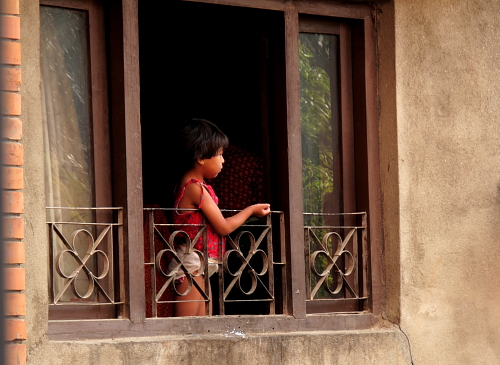
boy on balcony

View from my window

My friends, David and Cei, from Australia needed to see the doctor again because Cei was still suffering from brain swelling (or being a “fat head” as her father said once he heard she was going to be ok). About a week ago, she had been at just over 4500m and had a sudden onset of Pulmonary Edema; a very dangerous and life threatening ailment resulting in massive swelling of the brain, followed by ruptured blood vesicles in the cranium….then you die.  This is caused when the brain is starved of oxygen (at 5000m there is only ~50% of the O2 available, and given that we loose ~2% of our V02 (max oxygen uptake0 each year as we age…these altitude can cause problems.  Anyway Cei is very fit, was well rested, well hydrated, and acclimated properly. She was even taking Diamox (high altitude drug that helps O2 absorption-somehow) and had been higher a few days prior. Regardless,  she suddenly gets a massive headache, starts to throw-up uncontrollably, and begins to loose consciousness; all within an hour.  Miraculously, an Italian doctor was staying in a local village and had a medical kit from a summit expedition.  Cei, was given a huge dosage of steroids to stop the swelling, they tried to get a helicopter in but the weather prevented it, so they literally stuffed her into a “porter basket”, and her climbing guide, after securing the basket around his forehead, ran down slope for 2 jarring hours to a location that the aircraft could reach and an altitude that she may survive at.  So yesterday, we went to the Dr. because she was still having great difficulty with her motor skills.  Fortunately, her clinical exam showed improvement and the doctor believed she was going to fully recover; but they are going to continue to monitor and do a MRI (they all ready did a CT) tomorrow if she is not better.  It is also possible the altitude caused a stroke, but the doctor does not think so, and like he said “even if it did, there is nothing we can do about that now – is there”.  Medicine is a bit more practical and direct here.  Update: David, Cei and I just had breakfast and she continues to improve; they are booking tickets to a beach in Thailand to recover, and are planning on coming back in the spring to “finish, unfinished business…attempt the +6000m Island Peak again”. Update two: fully recovered.

As for me, I going for it in a few days.  I plan to fly to Lukla on the 10th and start a 21 day mini expedition.  I plan to ascend up the Gokyo valley, climb Gokyo peak (5480m), cross Chola pass and rejoin the primary route to Mt. Everest.  From there I will ascend to Everest base camp and Kalaphathar (5545) and the infamous ice fields.  Then I plan to double back and take the side route up to Chhakung; hike to high camp on Imja Tse (5820m) and tent over, and finally at 0200 hours around the 26th or 27thattempt to summit Imja Tse (Island Peak, 6181M).  So around that time, look up because that is hopefully where I will be.

What month is it? The monsoons are supposed to be long gone, but Nepal and much of Asia is getting hammered with rain; mudslides and flooding are widespread and the paper reported a corresponding 34 dead in Nepal. In KTM it has been coming down hard for a few days now and I am glad I am not in the mountain this week.  My trip may be pushed out a bit farther as many flights to Lukla are being cancelled.  This is fine with me however, because over the years every time they try to “force” flights onto Lukla’s  difficult mountain airstrip – they crash.

condom house

Lost in translation -again

Things in Nepal are often different! Sometimes often very different. Order anything with a preconception and you will likely be surprised and disappointed.  Check something out with an open mind, and you will likely laugh, or cry, but will enjoy the experience regardless.  The bakery advertised chocolate brownies – my favorite. First bite is always tentative and while good the heavy cinnamon threw me off – cinnamon really, in a brownie?  The Spaghetti with long chewy cheese strips layered in the middle was also a bit “off”.  But we may have found the most “not expected” thing in Nepal last evening. We had a high end ($20usd) dinner and could not help but noticing the bar below the restaurant.  The sign read: “Pussy Cat Bar, with shower”. After dinner, Cai says: “Ok guys I know you are dying to check that out, lets go…one drink”.  Now I have not been in a strip club for a few decades and, well,  I still haven’t.  We knew this had to be something special as this is a Maoist and thus very restrictive government.  Inside the bar we watched what could have been auditions for India/Nepal version of So you think you can dance; kind of a MC Hammer, meets Michael Jackson, meets John Travolta in a Bollywood thus very cheeky way. Some of the guys were actually pretty talented and the women served as back ground dancers (bad bad bad).  There was indeed two shower heads over the dance floor and the floor had a drain but they were never deployed.  We were actually concerned that one of the girls was going to put a high heel in a drain grate and break a leg. There was also a “pole”, which the guys used to swing around like Frank Sinatra in singing in the rain. One young women actually jumped on the pole for a micro second after a big approach…..we all looked at each other and nearly died. We asked Mimar (David and Cei Trekking guide) who joined us if this was a typical men’s club.  “oh yea, very good, but not just for men”.  What about the shower we asked, “with no clothes?”  “oh no, with clothes…sometimes they wash their hair, very nice, very very nice”. The best part was when we got the bill and Dave had to borrow some Rupees because he failed to realize that the coke he bought for a “host”, who proceeded to fill his beer after each sip and pat his knee, cost him $350rp (5 bucks). Not to be outdone, I also paid $350rp for a $15rp water and I opted out of the knee patting. As we walked back to the hotel, we each practiced our “moves” , laughed at the condominium project advertised as “condom house”, while the local police drove the street picking up drunks.

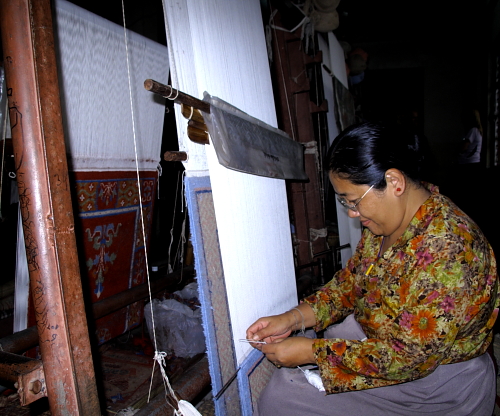
rug weaver

Tibetan rug weaver


We went a bit a field yesterday (relying on Lonely Planet) and discovered a remarkable Tibetan co-op where wool was being spun and carpets being made entirely by hand.  The women working there, without a doubt, were the happiest people I have ever met. We tentatively looked in the door and were greeted with a chorus of “Namaste” as the artist masterfully managed their looms and spinning wheels all under the watchful eye of a large photo of his holiness the Dali Lama. The co-op supports over a thousand Tibetan refugees and relies on funds generated from the hand made rugs they make.  Now, I have a thing for rugs; after my divorce I only asked for one picture, one chair, and both rugs (one Turkish, and one from Afghanistan); I am thinking about buying a 100 knot room rug – spectacular.


making yarn

Making yarn from lambs wool


My journal “fact checker” has weighed in once again and it is obvious that his cube in the United Arab Emirates is providing him to much contemplative time.  But facts are facts and I appreciate him holding me to the highest international reporting standards.  There is NO SUCH THING as yak milk, butter or cheese.  You see, as Yak is a male and a Nak is the female and thus the lactating one.  I apologize for this grievous oversight.

David and Cei were leaving in the morning and given that Lonely Planet had completely overlooked or decided not to report due to political correctness onthe “dance bar” scene in KTMm, we decided to do our own independent – complete review by going to every club in town.  I think we ultimately saw 7 or 8 clubs with names like “titanic (and the dancers were) “Crazy bar”, “Tequila bar”…….  many were equipped with shower equipment but I am sorry to report that we did not experience that; I think it may have been a pre-Maoist thing. What we did see was more really cheeky dancing with the guys being by far the most talented. But boy did we laugh.

I had a great week hanging out, seeing the sights, and exploring manufacturing options for their business, with David and Cei. I am looking forward to visiting them again in Brisbane or Laos….great people, and hanging out with the biggest guy in Asia was fun as the cleared the streets in front of Cei and me.

little tibet

Little Tibet
“I wonder how long it will take them to find my body?” This was my thought as I had been lying in the fetal position for 40 hours….and yet again, I fortunately did not die. One thing for certain, the ‘bugs” in the U.S. are wimps compared to the kick your ass prowess of these stomach creatures. I sent word to my porter and while the communication system here is crude, he got word and showed up to check on me. I am sipping water and fruit juice and am planning on heading to Lukla on the 12th.

A new caste

9-30
Kutumumsang to Chisopni 2180m
“Good no rain, we can take the local route” proclaimed my able guide. I have been on ladders that were not that steep, but I resigned myself not to let those 7 year old girls who were carrying 15 kilo of millet each beat me to the top. I should have left my ego at the bottom of the dry water fall that was the local route. Two thirds up and my shirt poured rather than drip sweat off the tail.  At the top I was on my knees not sure whether I should ask for salvation or simply death.
I finally figured out our plan.  After studying the miniature map in the guide book and piecing information together, I realized we were walking back to KTM-or nearly so.  Up a ridge to a saddle, down a ridge to a saddle, repeat. But the landscapes are amazing and we are now into a new caste area that is dominated by Hindu rather then Buddhist of the high elevations. While brutally hot and humid these low lands are dotted with homes, people, cows, goats, chickens, ox, dogs, buffalo, and even a non-black cat.
In Nepal when you are trekking a route, you are simply following an ancient route that has been named as a trekking route. The PCT this is not, and to call much of the last several days a trail is quite optimistic.  Rather, a landslide clears the vegetation and that slide, as if ordained, becomes the new route up or down. Six hours of this and your knees are begging for salvation.
Having a local guide is great and given that Angin is so well liked along the trail, I get the benefit of traveling with him, and thus receive excellent treatment and service.  And when we walked into the local bar tonight, as we grow near the end of our trek, I felt at home playing pool on a table with felt so thin you could see through to the slate below.
This town has some limited road access to vehicles (motorcycles only) but I am unsure as to why.  Never mind, I am sure.  If three young men can get a bike here why wouldn’t they.  One runs the clutch, one pushes or holds the bike back on down hills, and one pulls on the assents and try’s to slow the bike while not getting run over on the descents. Yea, I would try to get my bike here. Standing around we diagnosed the bike’s problems and get cheers from the local crowd when we get her to fire – only to hear moans as she dies when the clutch is let out. I know just enough, thanks to Dan my friend mechanic man, back home to know that the problem is fuel/air; oh if I  only had a different needle for this carburetor to compensate for the altitude, I could be king for a day.
Sometimes food just shows up. Today as I write a plate of spicy curry and potatoes combined with a dry rolled grain appears before me and Angin.  Ok, push the spoon aside with approving nods and use only the right hand to mix and transport food to mouth.
Today’s diet worked: Two boiled eggs, and black tea with sugar for breakfast; walk 2 hours and score a 500ml coke (plastic bottle and I don’t care); walk 2 hours for Ramen and a milk tea (milk slightly curdled but sugar cut it well), walk 2 hours and rely on Chili Verde burrito I ate back on August 27th to get me up the last hill; reach lodge and enjoy and Sprite and thank God and Warren Buffet for ensuring Coca Cola Bottling Company is still number one in Nepal and provides Coke, Fanta Orange, and Sprite to guys like me.

Kutumumsang to Chisopni 2180m

terraces

Millet and corn

“Good no rain, we can take the local route” proclaimed my able guide. I have been on ladders that were not that steep, but I resigned myself not to let those 7 year old girls who were carrying 15 kilo of millet each beat me to the top. I should have left my ego at the bottom of the dry water fall that was the local route. Two thirds up and my shirt poured rather than drip sweat off the tail.  At the top I was on my knees not sure whether I should ask for salvation or simply death.

I finally figured out our plan.  After studying the miniature map in the guide book and piecing information together, I realized we were walking back to KTM-or nearly so.  Up a ridge to a saddle, down a ridge to a saddle, repeat. But the landscapes are amazing and we are now into a new caste area that is dominated by Hindu rather then Buddhist of the high elevations. While brutally hot and humid these low lands are dotted with homes, people, cows, goats, chickens, ox, dogs, buffalo, and even a non-black cat.

In Nepal when you are trekking a route, you are simply following an ancient route that has been named as a trekking route. The PCT this is not, and to call much of the last several days a trail is quite optimistic.  Rather, a landslide clears the vegetation and that slide, as if ordained, becomes the new route up or down. Six hours of this and your knees are begging for salvation.

Having a local guide is great and given that Angin is so well liked along the trail, I get the benefit of traveling with him, and thus receive excellent treatment and service.  And when we walked into the local bar tonight, as we grow near the end of our trek, I felt at home playing pool on a table with felt so thin you could see through to the slate below.

This town has some limited road access to vehicles (motorcycles only) but I am unsure as to why.  Never mind, I am sure.  If three young men can get a bike here why wouldn’t they.  One runs the clutch, one pushes or holds the bike back on down hills, and one pulls on the assents and try’s to slow the bike while not getting run over on the descents. Yea, I would try to get my bike here. Standing around we diagnosed the bike’s problems and get cheers from the local crowd when we get her to fire – only to hear moans as she dies when the clutch is let out. I know just enough, thanks to Dan my friend mechanic man, back home to know that the problem is fuel/air; oh if I  only had a different needle for this carburetor to compensate for the altitude, I could be king for a day.

Sometimes food just shows up. Today as I write a plate of spicy curry and potatoes combined with a dry rolled grain appears before me and Angin.  Ok, push the spoon aside with approving nods and use only the right hand to mix and transport food to mouth.

Today’s diet worked: Two boiled eggs, and black tea with sugar for breakfast; walk 2 hours and score a 500ml coke (plastic bottle and I don’t care); walk 2 hours for Ramen and a milk tea (milk slightly curdled but sugar cut it well), walk 2 hours and rely on Chili Verde burrito I ate back on August 27th to get me up the last hill; reach lodge and enjoy and Sprite and thank God and Warren Buffet for ensuring Coca Cola Bottling Company is still number one in Nepal and provides Coke, Fanta Orange, and Sprite to guys like me.

Got water buffalo?

9-29
When Angin awoke me from a short nap before dinner, I was shaking violently.  I sat up and immediately threw up all over the floor – the hand hewn logs had ample vomit gaps and the mess disappeared to the earth below. Not sure what was wrong with me but the combination of poor diet, high altitude, and walking in the rain for 8 hours may be a factor.
At some point the rain always penetrates your best defenses. Sweating from the complete humidity, It first hits you neck like a squirming ice cube, follows you spine as you brace, runs down your ass crack for a second cleaning, and ultimately ends up in your shoe. Like New Zealand, in Nepal you have to be careful as you can go from so very hot to so very cold, so very quickly.
Playing with my diet and simple is good.  Oat porridge or a hard boiled egg for breakfast along with black tea.  But be careful as the very tasty oats are unrefined and will most likely have several rocks mixed in.  For lunch I have been sticking to noodle soups and like everywhere the soup is as good as the kitchen it came from. Some contain homemade noodles and are seasoned beautifully and some are literally the Asian version of Top Ramen.
Bamboo, Cedar, pine, a type of Madrone, and ferms all within meters of each other.  What a diverse flora; and species so far up the slope (at home, this is above timberline).
Down slope to a smoked filled tea house with “dinare hool” printed above the door, we stopped for warm liquids. Above the stove hung strips of meat that I had seen throughout the region in limited quantities, but had never seen on a menu or up close. I inquired out of curiously and was indeed told it was meat as I took a photo; no kidding. As I finished my tea and got ready to leave the women took down one of the strips and with a curved knife and brute force cut it into corn kernel sized pieces. Heating oil over the stove until it smoked she added onions to the black skillet, then seasoning, then a splash of water and ultimately the meat. Complete, she, surprisingly,  brought the plate of meat to me. I had decided, largely, to not order meat on this trip, but if it was offered out of kindness I would accept. The smaller pieces of meat and onions were good in that salty greasy way and the larger chunks tasked like old dirty boot leather. Actually really dirt boot.  After a lot of going back and forth I understood why.  The meat was specifically:  an old, male, water buffalo.
Regarding meat.  I LIKE it. I like it a LOT. But I have come to understand that the way we raise, produce, and distribute it in the states can only be described as environmentally sinful and morally wrong. That does not mean I do not eat it, I am just trying to be honest about the decision I am making; my like of meat out weighs my objections to how it get to my mouth. Interestingly, in Nepal meat is very limited and therefore it is used quite sparingly and in a sustainable manor. The diet here is dominated by plants. They have no choice, the land will not support a lot of meat production and thus that limited land must be used to produce the greatest (plants) return.
Witnessed high living trekking yesterday that a month ago I would have scorn. An older German man with a younger – drop dead (actually I was hoping he would drop dead….I wanted her) gorgeous French girlfriend or wife were traveling with 8 Nepalese; three porters, one guide, 2 cooks, 1 server, and 2 assistance.  Excessive?  Certainly, but this couple was providing good jobs for these local people; job good enough to support an extended family in a place that many live on less than $2 per day. I met another solo traveler who had three people working for him.  “What is that about?” I inquired.  “It is about giving back, sort of my way of sponsorship.  I employ this same family each year I come to Nepal, my friends here are brothers, and he is a son in law.  I go on a trek, go to their village, and pay for their children’s education….everyone wins and I feel good about it”.  Besides he continued “ If the children of these men are not educated, they will fall further prey to growing world economic gap and will be exploited further.  I am not advocating they give up their culture, just the opposite, but without education other will simply take their culture from them”.
9-30
Kutumumsang to Chisopni 2180m
“Good no rain, we can take the local route” proclaimed my able guide. I have been on ladders that were not that steep, but I resigned myself not to let those 7 year old girls who were carrying 15 kilo of millet each beat me to the top. I should have left my ego at the bottom of the dry water fall that was the local route. Two thirds up and my shirt poured rather than drip sweat off the tail.  At the top I was on my knees not sure whether I should ask for salvation or simply death.
I finally figured out our plan.  After studying the miniature map in the guide book and piecing information together, I realized we were walking back to KTM-or nearly so.  Up a ridge to a saddle, down a ridge to a saddle, repeat. But the landscapes are amazing and we are now into a new caste area that is dominated by Hindu rather then Buddhist of the high elevations. While brutally hot and humid these low lands are dotted with homes, people, cows, goats, chickens, ox, dogs, buffalo, and even a non-black cat.
In Nepal when you are trekking a route, you are simply following an ancient route that has been named as a trekking route. The PCT this is not, and to call much of the last several days a trail is quite optimistic.  Rather, a landslide clears the vegetation and that slide, as if ordained, becomes the new route up or down. Six hours of this and your knees are begging for salvation.
Having a local guide is great and given that Angin is so well liked along the trail, I get the benefit of traveling with him, and thus receive excellent treatment and service.  And when we walked into the local bar tonight, as we grow near the end of our trek, I felt at home playing pool on a table with felt so thin you could see through to the slate below.
This town has some limited road access to vehicles (motorcycles only) but I am unsure as to why.  Never mind, I am sure.  If three young men can get a bike here why wouldn’t they.  One runs the clutch, one pushes or holds the bike back on down hills, and one pulls on the assents and try’s to slow the bike while not getting run over on the descents. Yea, I would try to get my bike here. Standing around we diagnosed the bike’s problems and get cheers from the local crowd when we get her to fire – only to hear moans as she dies when the clutch is let out. I know just enough, thanks to Dan my friend mechanic man, back home to know that the problem is fuel/air; oh if I  only had a different needle for this carburetor to compensate for the altitude, I could be king for a day.
Sometimes food just shows up. Today as I write a plate of spicy curry and potatoes combined with a dry rolled grain appears before me and Angin.  Ok, push the spoon aside with approving nods and use only the right hand to mix and transport food to mouth.
Today’s diet worked: Two boiled eggs, and black tea with sugar for breakfast; walk 2 hours and score a 500ml coke (plastic bottle and I don’t care); walk 2 hours for Ramen and a milk tea (milk slightly curdled but sugar cut it well), walk 2 hours and rely on Chili Verde burrito I ate back on August 27th to get me up the last hill; reach lodge and enjoy and Sprite and thank God and Warren Buffet for ensuring Coca Cola Bottling Company is still number one in Nepal and provides Coke, Fanta Orange, and Sprite to guys like me.
9-29
When Angin awoke me from a short nap before dinner, I was shaking violently.  I sat up and immediately threw up all over the floor – the hand hewn logs had ample vomit gaps and the mess disappeared to the earth below. Not sure what was wrong with me but the combination of poor diet, high altitude, and walking in the rain for 8 hours may be a factor.
At some point the rain always penetrates your best defenses. Sweating from the complete humidity, It first hits you neck like a squirming ice cube, follows you spine as you brace, runs down your ass crack for a second cleaning, and ultimately ends up in your shoe. Like New Zealand, in Nepal you have to be careful as you can go from so very hot to so very cold, so very quickly.
Playing with my diet and simple is good.  Oat porridge or a hard boiled egg for breakfast along with black tea.  But be careful as the very tasty oats are unrefined and will most likely have several rocks mixed in.  For lunch I have been sticking to noodle soups and like everywhere the soup is as good as the kitchen it came from. Some contain homemade noodles and are seasoned beautifully and some are literally the Asian version of Top Ramen.
Bamboo, Cedar, pine, a type of Madrone, and ferms all within meters of each other.  What a diverse flora; and species so far up the slope (at home, this is above timberline).
Down slope to a smoked filled tea house with “dinare hool” printed above the door, we stopped for warm liquids. Above the stove hung strips of meat that I had seen throughout the region in limited quantities, but had never seen on a menu or up close. I inquired out of curiously and was indeed told it was meat as I took a photo; no kidding. As I finished my tea and got ready to leave the women took down one of the strips and with a curved knife and brute force cut it into corn kernel sized pieces. Heating oil over the stove until it smoked she added onions to the black skillet, then seasoning, then a splash of water and ultimately the meat. Complete, she, surprisingly,  brought the plate of meat to me. I had decided, largely, to not order meat on this trip, but if it was offered out of kindness I would accept. The smaller pieces of meat and onions were good in that salty greasy way and the larger chunks tasked like old dirty boot leather. Actually really dirt boot.  After a lot of going back and forth I understood why.  The meat was specifically:  an old, male, water buffalo.
Regarding meat.  I LIKE it. I like it a LOT. But I have come to understand that the way we raise, produce, and distribute it in the states can only be described as environmentally sinful and morally wrong. That does not mean I do not eat it, I am just trying to be honest about the decision I am making; my like of meat out weighs my objections to how it get to my mouth. Interestingly, in Nepal meat is very limited and therefore it is used quite sparingly and in a sustainable manor. The diet here is dominated by plants. They have no choice, the land will not support a lot of meat production and thus that limited land must be used to produce the greatest (plants) return.
Witnessed high living trekking yesterday that a month ago I would have scorn. An older German man with a younger – drop dead (actually I was hoping he would drop dead….I wanted her) gorgeous French girlfriend or wife were traveling with 8 Nepalese; three porters, one guide, 2 cooks, 1 server, and 2 assistance.  Excessive?  Certainly, but this couple was providing good jobs for these local people; job good enough to support an extended family in a place that many live on less than $2 per day. I met another solo traveler who had three people working for him.  “What is that about?” I inquired.  “It is about giving back, sort of my way of sponsorship.  I employ this same family each year I come to Nepal, my friends here are brothers, and he is a son in law.  I go on a trek, go to their village, and pay for their children’s education….everyone wins and I feel good about it”.  Besides he continued “ If the children of these men are not educated, they will fall further prey to growing world economic gap and will be exploited further.  I am not advocating they give up their culture, just the opposite, but without education other will simply take their culture from them”.
9-30
Kutumumsang to Chisopni 2180m
“Good no rain, we can take the local route” proclaimed my able guide. I have been on ladders that were not that steep, but I resigned myself not to let those 7 year old girls who were carrying 15 kilo of millet each beat me to the top. I should have left my ego at the bottom of the dry water fall that was the local route. Two thirds up and my shirt poured rather than drip sweat off the tail.  At the top I was on my knees not sure whether I should ask for salvation or simply death.
I finally figured out our plan.  After studying the miniature map in the guide book and piecing information together, I realized we were walking back to KTM-or nearly so.  Up a ridge to a saddle, down a ridge to a saddle, repeat. But the landscapes are amazing and we are now into a new caste area that is dominated by Hindu rather then Buddhist of the high elevations. While brutally hot and humid these low lands are dotted with homes, people, cows, goats, chickens, ox, dogs, buffalo, and even a non-black cat.
In Nepal when you are trekking a route, you are simply following an ancient route that has been named as a trekking route. The PCT this is not, and to call much of the last several days a trail is quite optimistic.  Rather, a landslide clears the vegetation and that slide, as if ordained, becomes the new route up or down. Six hours of this and your knees are begging for salvation.
Having a local guide is great and given that Angin is so well liked along the trail, I get the benefit of traveling with him, and thus receive excellent treatment and service.  And when we walked into the local bar tonight, as we grow near the end of our trek, I felt at home playing pool on a table with felt so thin you could see through to the slate below.
This town has some limited road access to vehicles (motorcycles only) but I am unsure as to why.  Never mind, I am sure.  If three young men can get a bike here why wouldn’t they.  One runs the clutch, one pushes or holds the bike back on down hills, and one pulls on the assents and try’s to slow the bike while not getting run over on the descents. Yea, I would try to get my bike here. Standing around we diagnosed the bike’s problems and get cheers from the local crowd when we get her to fire – only to hear moans as she dies when the clutch is let out. I know just enough, thanks to Dan my friend mechanic man, back home to know that the problem is fuel/air; oh if I  only had a different needle for this carburetor to compensate for the altitude, I could be king for a day.
Sometimes food just shows up. Today as I write a plate of spicy curry and potatoes combined with a dry rolled grain appears before me and Angin.  Ok, push the spoon aside with approving nods and use only the right hand to mix and transport food to mouth.

Today’s diet worked: Two boiled eggs, and black tea with sugar for breakfast; walk 2 hours and score a 500ml coke (plastic bottle and I don’t care); walk 2 hours for Ramen and a milk tea (milk slightly curdled but sugar cut it well), walk 2 hours and rely on Chili Verde burrito I ate back on August 27th to get me up the last hill; reach lodge and enjoy and Sprite and thank God and Warren Buffet for ensuring Coca Cola Bottling Company is still number one in Nepal and provides Coke, Fanta Orange, and Sprite to guys like me.

Not sure where I spend this night
stupa and lnagtang

Stupa below Langtang

When Angin awoke me from a short nap before dinner, I was shaking violently.  I sat up and immediately threw up all over the floor – the hand hewn logs had ample vomit gaps and the mess disappeared to the earth below. Not sure what was wrong with me but the combination of poor diet, high altitude, and walking in the rain for 8 hours may be a factor.

At some point the rain always penetrates your best defenses. Sweating from the complete humidity, It first hits you neck like a squirming ice cube, follows you spine as you brace, runs down your ass crack for a second cleaning, and ultimately ends up in your shoe. Like New Zealand, in Nepal you have to be careful as you can go from so very hot to so very cold, so very quickly.

Playing with my diet and simple is good.  Oat porridge or a hard boiled egg for breakfast along with black tea.  But be careful as the very tasty oats are unrefined and will most likely have several rocks mixed in.  For lunch I have been sticking to noodle soups and like everywhere the soup is as good as the kitchen it came from. Some contain homemade noodles and are seasoned beautifully and some are literally the Asian version of Top Ramen.

Bamboo, Cedar, pine, a type of Madrone, and ferms all within meters of each other.  What a diverse flora; and species so far up the slope (at home, this is above timberline).

Down slope to a smoked filled tea house with “dinare hool” printed above the door, we stopped for warm liquids. Above the stove hung strips of meat that I had seen throughout the region in limited quantities, but had never seen on a menu or up close. I inquired out of curiously and was indeed told it was meat as I took a photo; no kidding. As I finished my tea and got ready to leave the women took down one of the strips and with a curved knife and brute force cut it into corn kernel sized pieces. Heating oil over the stove until it smoked she added onions to the black skillet, then seasoning, then a splash of water and ultimately the meat. Complete, she, surprisingly,  brought the plate of meat to me. I had decided, largely, to not order meat on this trip, but if it was offered out of kindness I would accept. The smaller pieces of meat and onions were good in that salty greasy way and the larger chunks tasked like old dirty boot leather. Actually really dirt boot.  After a lot of going back and forth I understood why.  The meat was specifically:  an old, male, water buffalo.

Regarding meat.  I LIKE it. I like it a LOT. But I have come to understand that the way we raise, produce, and distribute it in the states can only be described as environmentally sinful and morally wrong. That does not mean I do not eat it, I am just trying to be honest about the decision I am making; my like of meat out weighs my objections to how it get to my mouth. Interestingly, in Nepal meat is very limited and therefore it is used quite sparingly and in a sustainable manor. The diet here is dominated by plants. They have no choice, the land will not support a lot of meat production and thus that limited land must be used to produce the greatest (plants) return.

Witnessed high living trekking yesterday that a month ago I would have scorn. An older German man with a younger – drop dead (actually I was hoping he would drop dead….I wanted her) gorgeous French girlfriend or wife were traveling with 8 Nepalese; three porters, one guide, 2 cooks, 1 server, and 2 assistance.  Excessive?  Certainly, but this couple was providing good jobs for these local people; job good enough to support an extended family in a place that many live on less than $2 per day. I met another solo traveler who had three people working for him.  “What is that about?” I inquired.  “It is about giving back, sort of my way of sponsorship.  I employ this same family each year I come to Nepal, my friends here are brothers, and he is a son in law.  I go on a trek, go to their village, and pay for their children’s education….everyone wins and I feel good about it”.  Besides he continued “ If the children of these men are not educated, they will fall further prey to growing world economic gap and will be exploited further.  I am not advocating they give up their culture, just the opposite, but without education other will simply take their culture from them”.

Sacred sites

9-28
Lanbrina yak to Gosainkundo 4300m
It rained hard and we awoke to spectacular views of Langtang, Annapurna, and the other massive mountains near and far. We walked the short 2 hours to the sacred lakes of the Hindu people and the site of a massive holy man pilgrimage during the monsoon season.  Beautiful place, but has nothing on the Sierra Nevada lakes of my home land.
Along the Langtang route we passed thousands of stone tablets that had the background rock chiseled away leaving only the raised letters of Buddhist mantra found throughout the region. They look like museum pieces each one, but here they are used as pavers, and line walls.  Prayer wheels/drums also containing  the same mantra are also prevalent throughout the region. The water prayer wheels are my favorite; a structure is built over a creek and a prayer drum is placed inside. The drum is attached to a shaft that is attached to a small blade at the bottom and placed in the moving water.  The blade is propelled by the water, thus turning the shaft and the prayer wheel – naturally and appropriately in a clock wise manor thus providing a constantly turning prayer. Some are painted beautifully in bright blues, reds, greens, and yellows and some are cast from rich brass.
Most tourist I have met have been delightful but there are exceptions.  Like Sara pointed out in Skorea, most of the young American military guys there are uneducated, culturally rude jerks.  Seems like there is a trend (age, military?), as I have ran across several groups of young Israeli men who have just completed there compulsory military service.  With notable exceptions, they seem to be low on money, high on expectations, and short on cultural respect.  Apparently this has not gone unnoticed and some lodges actually and, if they can afford it, refuse service; culturally this is very difficult for a Nepalese and they are a very warm and excepting culture – thus you know it is really bad behavior.
Differences do abound culturally.  For example, while Nepal language has a word for thank you it is used reservedly, whereas we use it all the time; even more so here as most tourist truly appreciate and are thankful for the service they receive.  Along the main routes it is not so noticeable but if you say thank you for a small thing in the more remote areas you will likely get some funny looks.  Conversely, if you expect a thank you, you may be disappointed.   We ran across a young man, that had a pretty nasty infection on the edge of his mouth.  Anjin, ask me I had any medicine, and we proceeded to doctor the guy up pretty well given what materials and limited expertise I had. When finished, he simply stood up and walked away.  So expectations can get you. I am pretty certain however, that that same man would do anything he could to help someone as well; that is the real expectation minus the niceties.
9-29
When Angin awoke me from a short nap before dinner, I was shaking violently.  I sat up and immediately threw up all over the floor – the hand hewn logs had ample vomit gaps and the mess disappeared to the earth below. Not sure what was wrong with me but the combination of poor diet, high altitude, and walking in the rain for 8 hours may be a factor.
At some point the rain always penetrates your best defenses. Sweating from the complete humidity, It first hits you neck like a squirming ice cube, follows you spine as you brace, runs down your ass crack for a second cleaning, and ultimately ends up in your shoe. Like New Zealand, in Nepal you have to be careful as you can go from so very hot to so very cold, so very quickly.
Playing with my diet and simple is good.  Oat porridge or a hard boiled egg for breakfast along with black tea.  But be careful as the very tasty oats are unrefined and will most likely have several rocks mixed in.  For lunch I have been sticking to noodle soups and like everywhere the soup is as good as the kitchen it came from. Some contain homemade noodles and are seasoned beautifully and some are literally the Asian version of Top Ramen.
Bamboo, Cedar, pine, a type of Madrone, and ferms all within meters of each other.  What a diverse flora; and species so far up the slope (at home, this is above timberline).
Down slope to a smoked filled tea house with “dinare hool” printed above the door, we stopped for warm liquids. Above the stove hung strips of meat that I had seen throughout the region in limited quantities, but had never seen on a menu or up close. I inquired out of curiously and was indeed told it was meat as I took a photo; no kidding. As I finished my tea and got ready to leave the women took down one of the strips and with a curved knife and brute force cut it into corn kernel sized pieces. Heating oil over the stove until it smoked she added onions to the black skillet, then seasoning, then a splash of water and ultimately the meat. Complete, she, surprisingly,  brought the plate of meat to me. I had decided, largely, to not order meat on this trip, but if it was offered out of kindness I would accept. The smaller pieces of meat and onions were good in that salty greasy way and the larger chunks tasked like old dirty boot leather. Actually really dirt boot.  After a lot of going back and forth I understood why.  The meat was specifically:  an old, male, water buffalo.
Regarding meat.  I LIKE it. I like it a LOT. But I have come to understand that the way we raise, produce, and distribute it in the states can only be described as environmentally sinful and morally wrong. That does not mean I do not eat it, I am just trying to be honest about the decision I am making; my like of meat out weighs my objections to how it get to my mouth. Interestingly, in Nepal meat is very limited and therefore it is used quite sparingly and in a sustainable manor. The diet here is dominated by plants. They have no choice, the land will not support a lot of meat production and thus that limited land must be used to produce the greatest (plants) return.
Witnessed high living trekking yesterday that a month ago I would have scorn. An older German man with a younger – drop dead (actually I was hoping he would drop dead….I wanted her) gorgeous French girlfriend or wife were traveling with 8 Nepalese; three porters, one guide, 2 cooks, 1 server, and 2 assistance.  Excessive?  Certainly, but this couple was providing good jobs for these local people; job good enough to support an extended family in a place that many live on less than $2 per day. I met another solo traveler who had three people working for him.  “What is that about?” I inquired.  “It is about giving back, sort of my way of sponsorship.  I employ this same family each year I come to Nepal, my friends here are brothers, and he is a son in law.  I go on a trek, go to their village, and pay for their children’s education….everyone wins and I feel good about it”.  Besides he continued “ If the children of these men are not educated, they will fall further prey to growing world economic gap and will be exploited further.  I am not advocating they give up their culture, just the opposite, but without education other will simply take their culture from them”.
9-30
Kutumumsang to Chisopni 2180m
“Good no rain, we can take the local route” proclaimed my able guide. I have been on ladders that were not that steep, but I resigned myself not to let those 7 year old girls who were carrying 15 kilo of millet each beat me to the top. I should have left my ego at the bottom of the dry water fall that was the local route. Two thirds up and my shirt poured rather than drip sweat off the tail.  At the top I was on my knees not sure whether I should ask for salvation or simply death.
I finally figured out our plan.  After studying the miniature map in the guide book and piecing information together, I realized we were walking back to KTM-or nearly so.  Up a ridge to a saddle, down a ridge to a saddle, repeat. But the landscapes are amazing and we are now into a new caste area that is dominated by Hindu rather then Buddhist of the high elevations. While brutally hot and humid these low lands are dotted with homes, people, cows, goats, chickens, ox, dogs, buffalo, and even a non-black cat.
In Nepal when you are trekking a route, you are simply following an ancient route that has been named as a trekking route. The PCT this is not, and to call much of the last several days a trail is quite optimistic.  Rather, a landslide clears the vegetation and that slide, as if ordained, becomes the new route up or down. Six hours of this and your knees are begging for salvation.
Having a local guide is great and given that Angin is so well liked along the trail, I get the benefit of traveling with him, and thus receive excellent treatment and service.  And when we walked into the local bar tonight, as we grow near the end of our trek, I felt at home playing pool on a table with felt so thin you could see through to the slate below.
This town has some limited road access to vehicles (motorcycles only) but I am unsure as to why.  Never mind, I am sure.  If three young men can get a bike here why wouldn’t they.  One runs the clutch, one pushes or holds the bike back on down hills, and one pulls on the assents and try’s to slow the bike while not getting run over on the descents. Yea, I would try to get my bike here. Standing around we diagnosed the bike’s problems and get cheers from the local crowd when we get her to fire – only to hear moans as she dies when the clutch is let out. I know just enough, thanks to Dan my friend mechanic man, back home to know that the problem is fuel/air; oh if I  only had a different needle for this carburetor to compensate for the altitude, I could be king for a day.
Sometimes food just shows up. Today as I write a plate of spicy curry and potatoe

Lanbrina yak to Gosainkundo 4300m

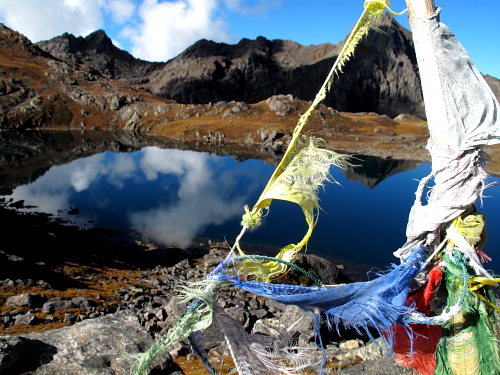
prayer flags at Hindu holy lake

Holy Hindu lake

It rained hard and we awoke to spectacular views of Langtang, Annapurna, and the other massive mountains near and far. We walked the short 2 hours to the sacred lakes of the Hindu people and the site of a massive holy man pilgrimage during the monsoon season.  Beautiful place, but has nothing on the Sierra Nevada lakes of my home land.

Along the Langtang route we passed thousands of stone tablets that had the background rock chiseled away leaving only the raised letters of Buddhist mantra found throughout the region. They look like museum pieces each one, but here they are used as pavers, and line walls.  Prayer wheels/drums also containing  the same mantra are also prevalent throughout the region. The water prayer wheels are my favorite; a structure is built over a creek and a prayer drum is placed inside. The drum is attached to a shaft that is attached to a small blade at the bottom and placed in the moving water.  The blade is propelled by the water, thus turning the shaft and the prayer wheel – naturally and appropriately in a clock wise manor thus providing a constantly turning prayer. Some are painted beautifully in bright blues, reds, greens, and yellows and some are cast from rich brass.

Most tourist I have met have been delightful but there are exceptions.  Like Sara pointed out in Skorea, most of the young American military guys there are uneducated, culturally rude jerks.  Seems like there is a trend (age, military?), as I have ran across several groups of young Israeli men who have just completed there compulsory military service.  With notable exceptions, they seem to be low on money, high on expectations, and short on cultural respect.  Apparently this has not gone unnoticed and some lodges actually and, if they can afford it, refuse service; culturally this is very difficult for a Nepalese and they are a very warm and excepting culture – thus you know it is really bad behavior.

Differences do abound culturally.  For example, while Nepal language has a word for thank you it is used reservedly, whereas we use it all the time; even more so here as most tourist truly appreciate and are thankful for the service they receive.  Along the main routes it is not so noticeable but if you say thank you for a small thing in the more remote areas you will likely get some funny looks.  Conversely, if you expect a thank you, you may be disappointed.   We ran across a young man, that had a pretty nasty infection on the edge of his mouth.  Anjin, ask me I had any medicine, and we proceeded to doctor the guy up pretty well given what materials and limited expertise I had. When finished, he simply stood up and walked away.  So expectations can get you. I am pretty certain however, that that same man would do anything he could to help someone as well; that is the real expectation minus the niceties.